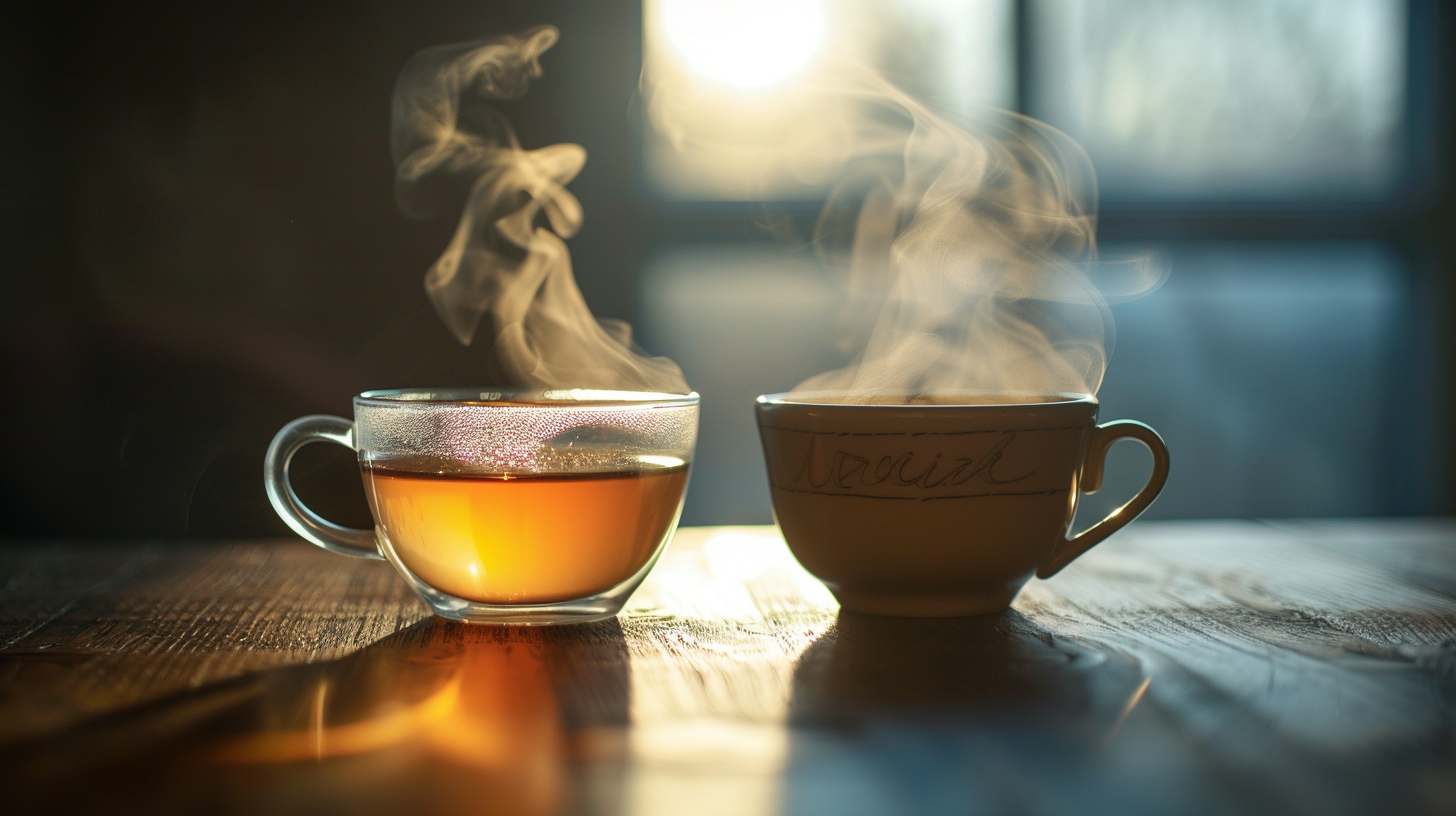
This isn't a hit piece on coffee. Coffee is great. But if you're curious about tea, or wondering whether switching (or adding tea alongside coffee) makes sense, here's what actually matters.
The quick comparison
| Tea | Coffee | |
|---|---|---|
| Caffeine per cup | 25-70mg | 80-200mg |
| Cost per cup (quality) | $0.25-0.75 | $0.50-1.50 |
| Equipment needed | Kettle + infuser ($15) | Varies ($15-$300+) |
| Prep time | 3-5 min | 2-10 min |
| Flavor variety | 6 major types, thousands of varieties | Roast levels + origins |
| Re-usable? | Many teas steep 3-7 times | One use per grounds |
| Teeth staining | Less (except black tea) | More |
Caffeine: it's not just about the number
Yes, coffee has more caffeine per cup. But the experience is different. Coffee hits fast, peaks hard, and can crash. Tea releases caffeine more gradually, partly because of L-theanine, an amino acid that promotes calm focus. The result: alert without jittery.
If you drink coffee for the energy, tea can deliver that. You might need two cups of black tea to match one coffee, but the energy curve is smoother. Many people describe it as "focused" rather than "wired."
If you drink coffee for the ritual and flavor? Tea has that covered, and then some.
Cost per cup
Loose leaf tea is surprisingly cheap per serving. A $10 bag of quality loose leaf makes 40-60 cups. That's $0.17-0.25 per cup. Many oolongs can be re-steeped 3-5 times, making the per-cup cost even lower.
Specialty coffee beans cost $15-25 per bag and make 20-30 cups at around $0.50-1.25 per cup. Add milk and you're higher.
If you're currently spending $5/day at a coffee shop, switching to home-brewed tea saves roughly $1,500/year. Even switching just your afternoon drink saves hundreds.
Flavor: tea wins on variety
This is where tea genuinely outshines coffee. Coffee has different roast levels and origins, but it's fundamentally one flavor profile (roasted, bitter, nutty/fruity/chocolate).
Tea has six major types, each with completely different flavor profiles:
- Black tea: Malty, rich, full-bodied. The coffee-drinker's entry point.
- Green tea: Grassy, sweet, refreshing. Light and clean.
- Oolong: Anywhere from floral and buttery to roasted and mineral. The most diverse category.
- White tea: Delicate, sweet, melon-like. Subtle and rewarding.
- Pu-erh: Earthy, smooth, aged. Like the whisky of tea.
- Herbal: Anything from peppermint to chamomile to rooibos. Caffeine-free options.
Within each type, there are hundreds of specific teas. A Taiwanese high-mountain oolong tastes nothing like a roasted Wuyi oolong, which tastes nothing like a Japanese sencha. The exploration never ends.
Curious? Start exploring.
Resteeped has 8,000+ teas. Browse by type, flavor, or caffeine level. Find what clicks for you. Free on iOS.

The "but I need my coffee" argument
Fair. Most people aren't going to quit coffee cold turkey, and there's no reason to. The better play: keep your morning coffee, replace your afternoon coffee with tea. You get the afternoon energy without the sleep disruption. Many coffee lovers find that tea scratches a different itch. It's less about replacing and more about adding.
If you do want to fully switch, start with black tea. Assam and English Breakfast have enough body and caffeine to feel satisfying to a coffee palate. Then explore from there.
The bottom line
Coffee and tea aren't competitors. They're different tools. Coffee is a sledgehammer of energy. Tea is a Swiss army knife of flavor, calm focus, and variety. Most people end up drinking both, depending on the moment.
If you've been coffee-only and you're curious, give tea a real shot. Not a dusty tea bag from the back of the pantry. Real loose leaf tea, brewed properly. You might find something you didn't know you were missing.
Keep reading
- Best Loose Leaf Tea for Beginners — Where to start
- Oolong vs Green Tea — The two most interesting types
- Brew Timer — Get the temperature and timing right